In modern manufacturing, **CNC (Computer Numerical Control) machines** are the backbone of production, but their sudden failure can halt operations and incur massive costs. Traditional maintenance—either reactive (waiting for failure) or preventive (scheduled)—is inefficient. The future lies in **Predictive Maintenance (PdM)**, powered by AI and robust data products. This approach shifts maintenance from a cost center to a strategic operational advantage.
The Predictive Maintenance Data Product Pipeline
An effective AI-driven PdM solution is structured as a data product, moving seamlessly from sensor data ingestion to actionable intelligence. The process involves three main stages: Data Inputs, AI Modeling, and Maintenance Actions.
1. Data Inputs: Sensing the Machine State
The foundation of PdM is high-quality, real-time data collected from the CNC machine and its operating environment. AI models consume diverse data streams to create a comprehensive understanding of the machine's health.
- Real-Time Sensor Data: High-frequency readings from vibration sensors, temperature gauges, pressure sensors, and current/voltage monitors.
- Machine Operational Logs: Data points related to duty cycles, error codes, tool usage, axis movements, and spindle speeds.
- Historical Maintenance Records: Crucial for training, these records include past failure dates, replaced parts, repair logs, and costs.
- Environmental Variables: Ambient temperature, humidity, and other external factors that might influence machine wear and tear.
2. AI Modeling: Predicting Failure and Degradation
The core of the data product is the AI engine, which uses advanced machine learning techniques to process raw data and generate a probability of failure.
- Data Pre-processing: Cleaning, normalizing, and synchronizing disparate data sources (time-series, categorical, and text data).
- Feature Engineering: Creating meaningful inputs for the model, such as calculating the **Root Mean Square (RMS)** of vibration, or detecting shifts in frequency spectra.
- Anomaly Detection: Using unsupervised learning to detect deviations from the machine's normal operating baseline, often the first indicator of an impending issue.
- Time-to-Failure Prediction (RUL): Utilizing regression or classification models to predict the **Remaining Useful Life (RUL)** of a component or the exact time a failure is likely to occur.
3. Maintenance Actions: Driving Prescriptive Outcomes
The final stage converts predictions into immediate and optimized business decisions, maximizing uptime and efficiency.
- Automated Alerts and Diagnostics: Triggering notifications for maintenance staff with details on the predicted failure mode (e.g., 'Bearing Failure on Spindle 2').
- Maintenance Scheduling Optimization: Automatically reserving resources, ordering necessary parts, and scheduling the repair during planned downtime to eliminate interruptions.
- Operational Recommendation: Providing real-time prescriptive advice, such as temporarily reducing the spindle speed to extend the life of a degraded component until the next service window.
- Feedback Loop: Integrating the outcomes of maintenance actions back into the data product to continuously retrain and improve the AI models.
Visualizing the CNC PdM Data Product
The following slides detail the technical and strategic layers of this end-to-end AI solution, from data ingestion to actionable insights.


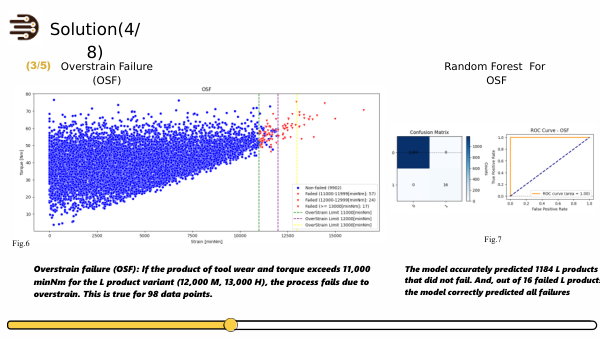

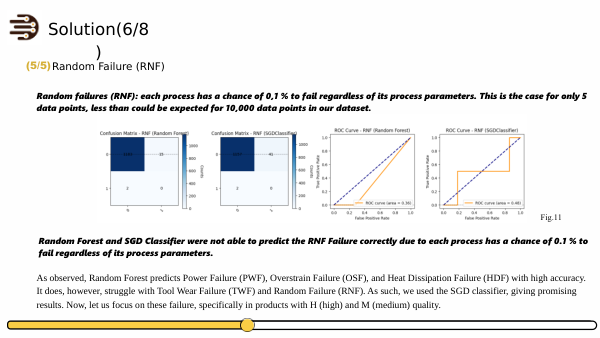



Slides 1-5 (Setup & Data): Introduce the PdM framework and detail the initial layers, emphasizing the necessity of clean, integrated data from sensors, machine logs, and historical maintenance records.
Slides 6-9 (Modeling & Prediction): Illustrate the core AI work—feature engineering, anomaly detection, RUL prediction using machine learning, and translating complex model outputs into understandable probability scores for business use.
Slides 10-16 (Action & Strategy): Focus on the actionable side: automated alerts, optimizing maintenance schedules, the crucial feedback loop for model refinement, and the overarching business benefits like cost savings and increased uptime.
Conclusion: The Strategic Value of AI in Manufacturing
Moving from traditional maintenance to **AI-driven PdM** transforms the manufacturing floor. It eliminates costly **unplanned downtime** by allowing repairs to be scheduled precisely when needed, but before failure occurs. This operational shift not only saves money but dramatically improves machine utilization, product quality, and overall production stability, positioning the organization at the forefront of **Industry 4.0**.