
What Are Multi-Agent Systems?
A Multi-Agent System (MAS) is a collection of autonomous, intelligent agents that interact with each other and their environment to achieve individual or collective goals. Think of it like a highly efficient team where each member has a specific role, can make their own decisions, but works in concert with others to accomplish a complex task.
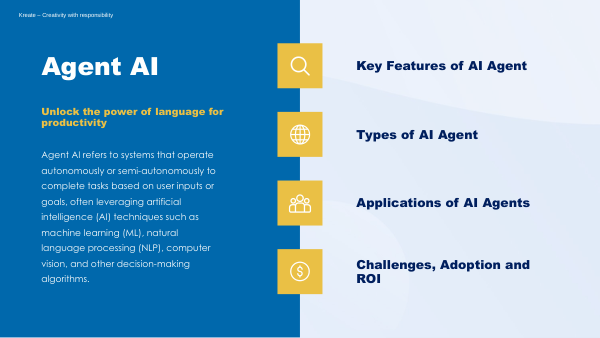
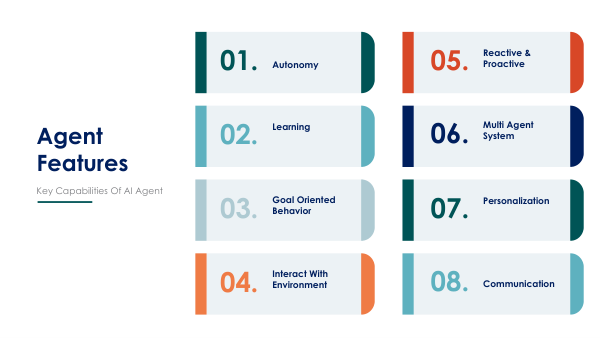
Fig 1: A conceptual model of a Multi-Agent System, where individual agents (nodes) communicate and collaborate.
Real-world analogies are everywhere: from a colony of ants coordinating to find food, to a soccer team executing a complex play, to a network of air traffic controllers managing thousands of flights. In each case, the power of the system comes not just from the capabilities of the individuals, but from their ability to communicate and collaborate effectively.
Why A2A is the Backbone of Intelligent Collaboration
If agents are the "brains" of a multi-agent system, then Agent-to-Agent (A2A) communication is its central nervous system. It's the mechanism that allows individual intelligence to transform into collective wisdom. Without A2A, a multi-agent system is just a collection of isolated entities. With it, they become a cohesive, problem-solving force capable of tackling challenges far beyond the scope of any single agent.
Coordination & Synchronization
Agents share status updates and intentions to align their actions, avoiding conflicts and ensuring tasks are executed in the correct sequence. (e.g., "I am starting task A, has anyone completed task B?").
Negotiation & Agreement
Agents can bargain, make proposals, and reach consensus on resource allocation or strategy. (e.g., "I can handle the data processing if you manage the user interface.").
Shared Knowledge & Learning
An agent can share a newly learned piece of information with the entire system, allowing the collective to adapt and improve much faster. (e.g., "Warning: the primary server is slow, reroute requests to the backup.").
Task Delegation
One agent can break down a large problem and delegate sub-tasks to other agents that have the specific skills or capacity to handle them efficiently.
Real-World Applications
The principles of A2A communication are already powering sophisticated systems today:
- Supply Chain Management: Autonomous agents representing suppliers, warehouses, and shipping companies negotiate delivery times and prices to optimize logistics in real-time.
- Smart Grids: Agents manage energy production and consumption across a network, buying and selling electricity to balance loads and prevent blackouts.
- Autonomous Vehicles: Cars communicate their speed, position, and intent to coordinate lane changes, avoid collisions, and optimize traffic flow.
- Robotics & Manufacturing: Collaborative robots (cobots) on an assembly line communicate to safely share a workspace and coordinate their tasks.
The Future is Collaborative
As AI becomes more sophisticated, the focus is shifting from individual agent intelligence to the power of collective, collaborative systems. A2A communication is the essential ingredient that makes this collaboration possible, paving the way for more resilient, efficient, and intelligent AI solutions to the world's most complex problems.